
With the help of the File Uploader Module, users can upload files to the specific selected Google Drive folder allocated by you. In this guide, we will elaborate on how to properly use and manage the File Uploader Module.
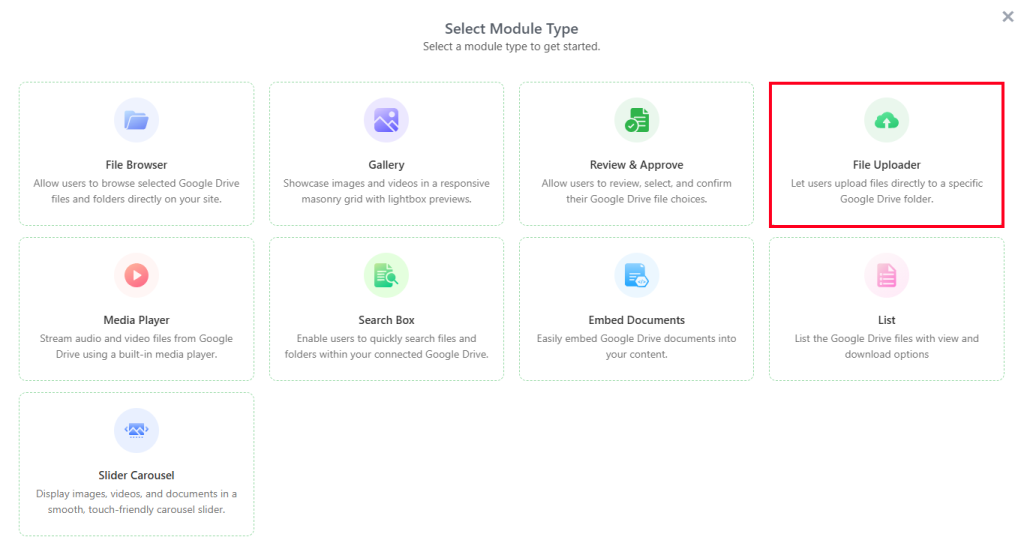
Step-1: Choose the File Uploader Module
- Navigate to Google Drive.
- Go to Module Builder from your WordPress dashboard.
- Click on Add New Module.
- Select File Uploader from the Types tab.
- Change the module title as per your project type.
Step-2: Configure Source Tab
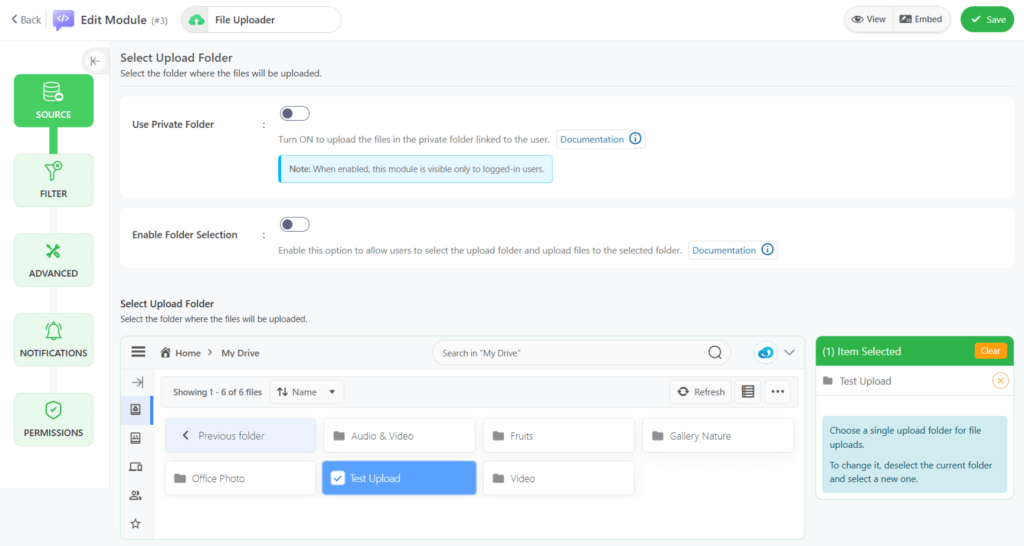
On the Sources Tab select folders where you want to permit users to upload files & folders by clicking the plus sign button. On the right side, your selected files will be displayed. You can drag them up or down to change their orders.
- Use Private Folder: Turn ON to upload the files in the private folder linked to the user. Note: If enabled this module will be visible only to logged-in users.
- Create Private Folder: Turn ON to create and link a folder automatically to the user who has not linked any folder yet while the user will view the module.
- Folder Name Template: Set the folder name template for the automatically created private folders.
- Parent Folder: Select the parent folder where the automatically created private folders will be created.
- Template Folder: Select the template folder that will be copied to the new private folder.
- Create Private Folder: Turn ON to create and link a folder automatically to the user who has not linked any folder yet while the user will view the module.
- Use ACF field Files: Enable this option to use the ACF field files dynamically as the source for the module. Enter the ACF field name in the ACF Field Key input box to use the files from the ACF field.
- Enable Folder Selection: Enable this option to allow users to select the upload folder and upload files to the selected folder.
- Select Upload Folders: Select the upload folders for the users to select the folder to upload files.
- Select Default Folder: Select the default folder where the files will be uploaded if the user doesn’t select any folder.
- Folder Selection Label: Set the label for the folder selection.
Step-3: Configure Filter Tab
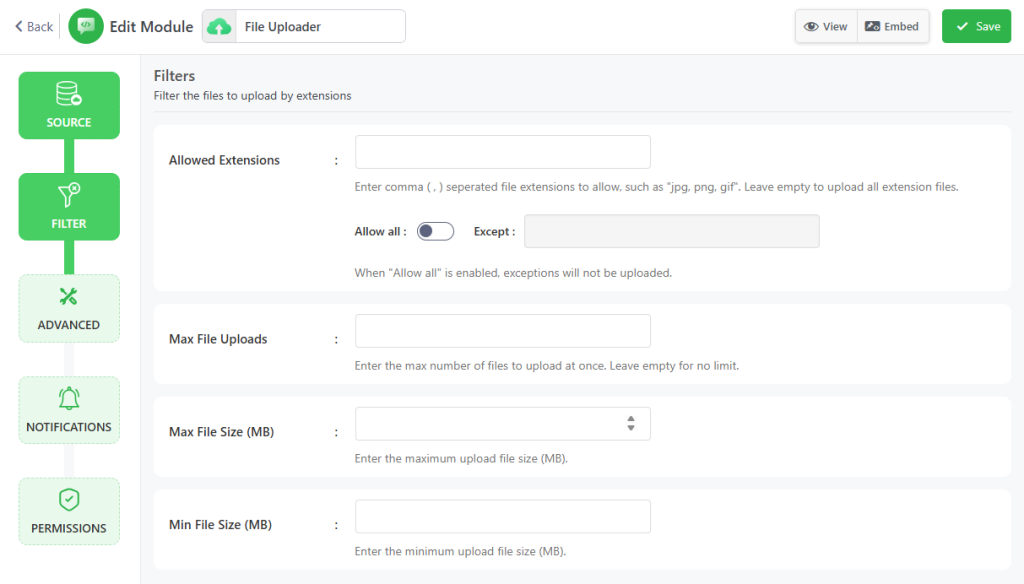
Head over to the Filter tab, where you can allow/ disallow files through their extensions.
With the help of the Filter tab, you can simply allow/ disallow any files with the extensions you want. For example, you want to allow/ disallow (.jpg, .png, .ppt, .doc files).
Simply type the extensions in the Allowed Extensions box, and you get to go. Keep in mind that when “Allow all” is enabled, exceptions will not be uploaded.
- Allowed Extensions: Enter comma (,) separated file extensions to allow, such as “jpg, png, gif”. Leave empty to upload all extension files.
- Max File Uploads: Enter the maximum number of files you want to allow users to upload.
- Min File Uploads: Enter the minimum number of files to upload. Leave empty for no limit.
- Max File Size (MB): Enter the maximum file upload size in MB.
- Min File Size (MB): Enter the minimum file upload size in MB.
Step-4: Configure Advanced Tab
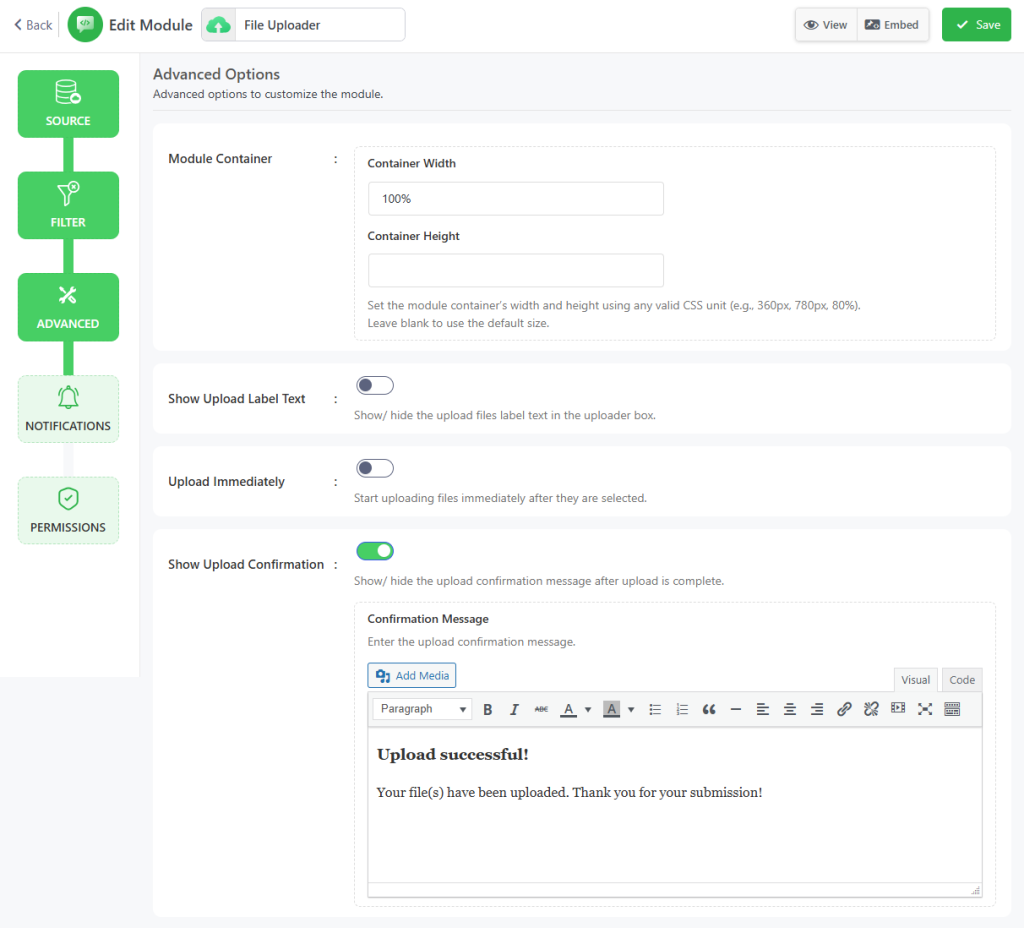
In the Advanced Tab, you can customize some advanced settings as per your requirements.
- Module Container: Set the module container width and height. You can use any valid CSS unit (pixels, percentage), eg ‘360px’, ‘780px’, ‘80%’. Keep blank for a default value.
- Show Upload Label Text: Display an upload label text that will be visible under the upload button.
- Upload Immediately: Start uploading files immediately after they are selected.
- Show Upload Confirmation: Show/ hide the upload confirmation message after upload is complete.
- Confirmation Message: Enter the upload confirmation message.
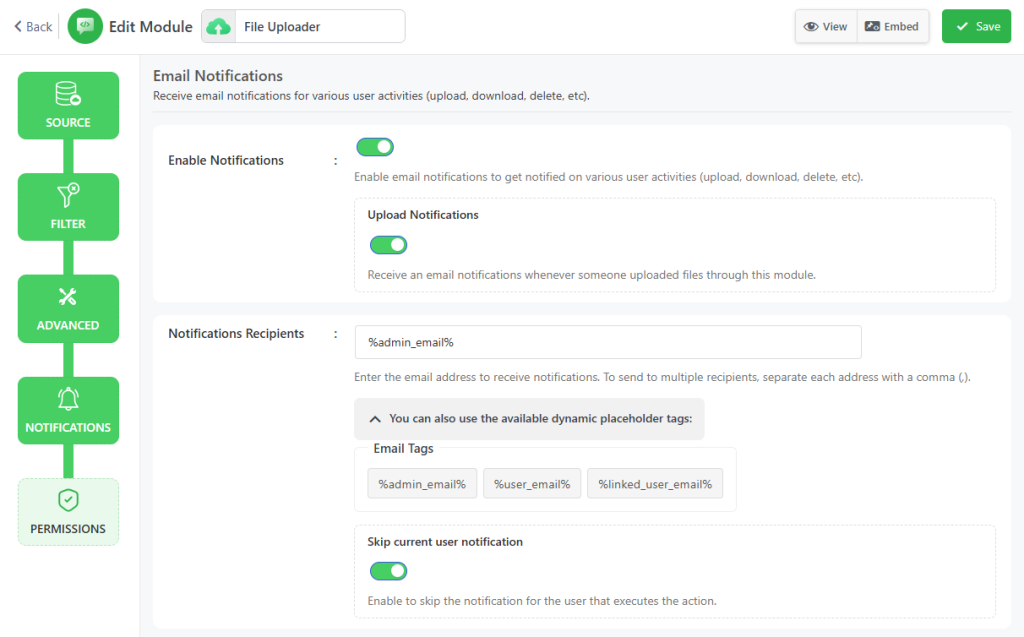
Step-5: Configure Notifications Tab
Now you will be redirected to the Notifications tab, where you will customize notification settings configuration.
- Enable Notifications: Enable email notifications to get notified on various user activities (upload, download, delete, etc).
- Upload Notification: Receive an email notification whenever someone uploads files through this module.
- Notification Recipients: Enter the email address where the notifications will be sent. Add multiple email addresses by separating them with a comma (,). Placeholder example: %admin_email%, %user_email%
- Skip Current User Notification: Enable to skip the notification for the user who executes the action.
Step-6: Configure Permissions Tab
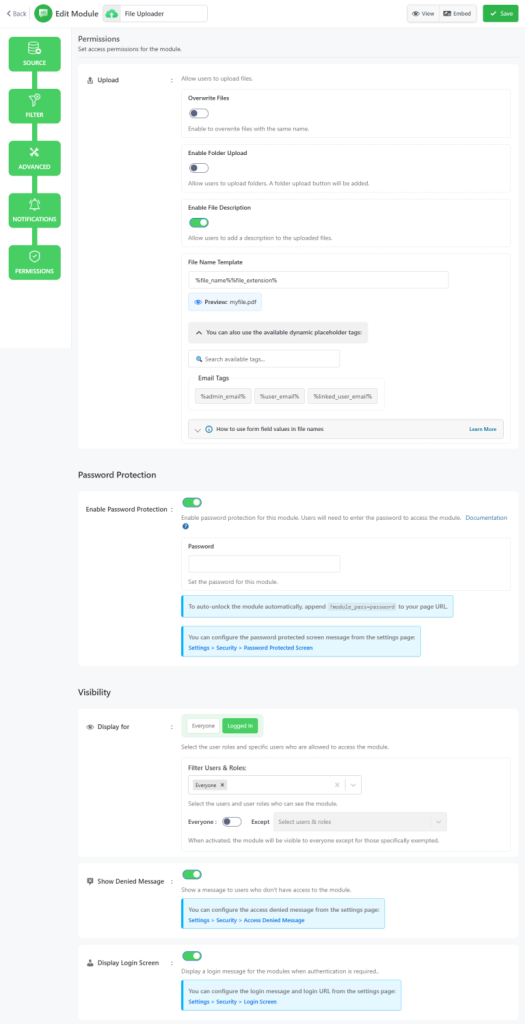
User Permissions Settings is the final step. Where you can manually allocate display options.
- Upload: Allow users to upload files.
- Overwrite Files: Enable overwriting files with the same name.
- Enable Folder Upload: Allow users to upload folders. A folder upload button will be added.
- Enable File Description: Allow users to add a description to the uploaded files.
- File Name Template: Enter file name template. You can use predefined templates to configure.
- Enable Password Protection: Enable password protection for this module. Users will need to enter the password to access the module.
- Password: Set the password for this module.
- Display for: Select the user roles and specific users who are allowed to access the module.
- Everyone: Display the module for everyone.
- Logged In: Display the module for logged-in users only.
- Everyone Expect: When activated, the module will be visible to everyone except for those specifically exempted.
- Show Denied Message: Show a message to users who don’t have access to the module.
- Display Login Screen: Display a login message for the modules when authentication is required.
Click Save Changes > copy the shortcode from the module builder page. Now you can use the shortcode to display the file browser module inside any posts or pages.
Output
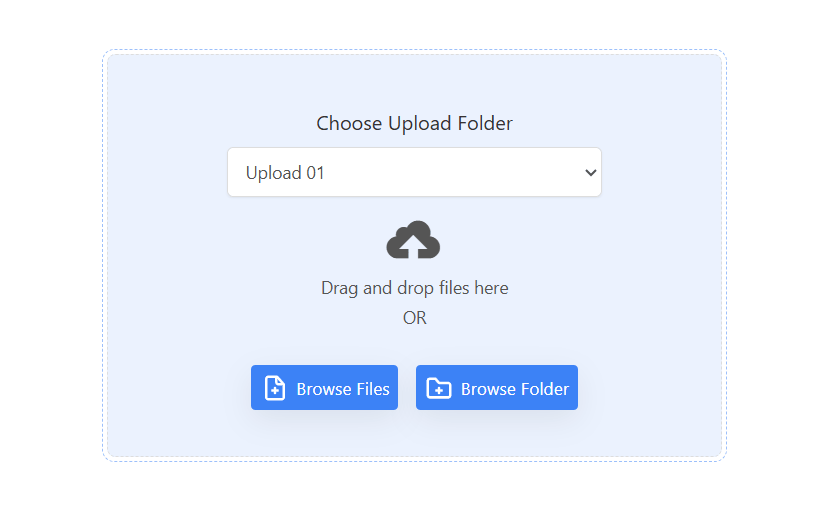
This is how the uploader will look once you embed it inside any of your pages or posts.